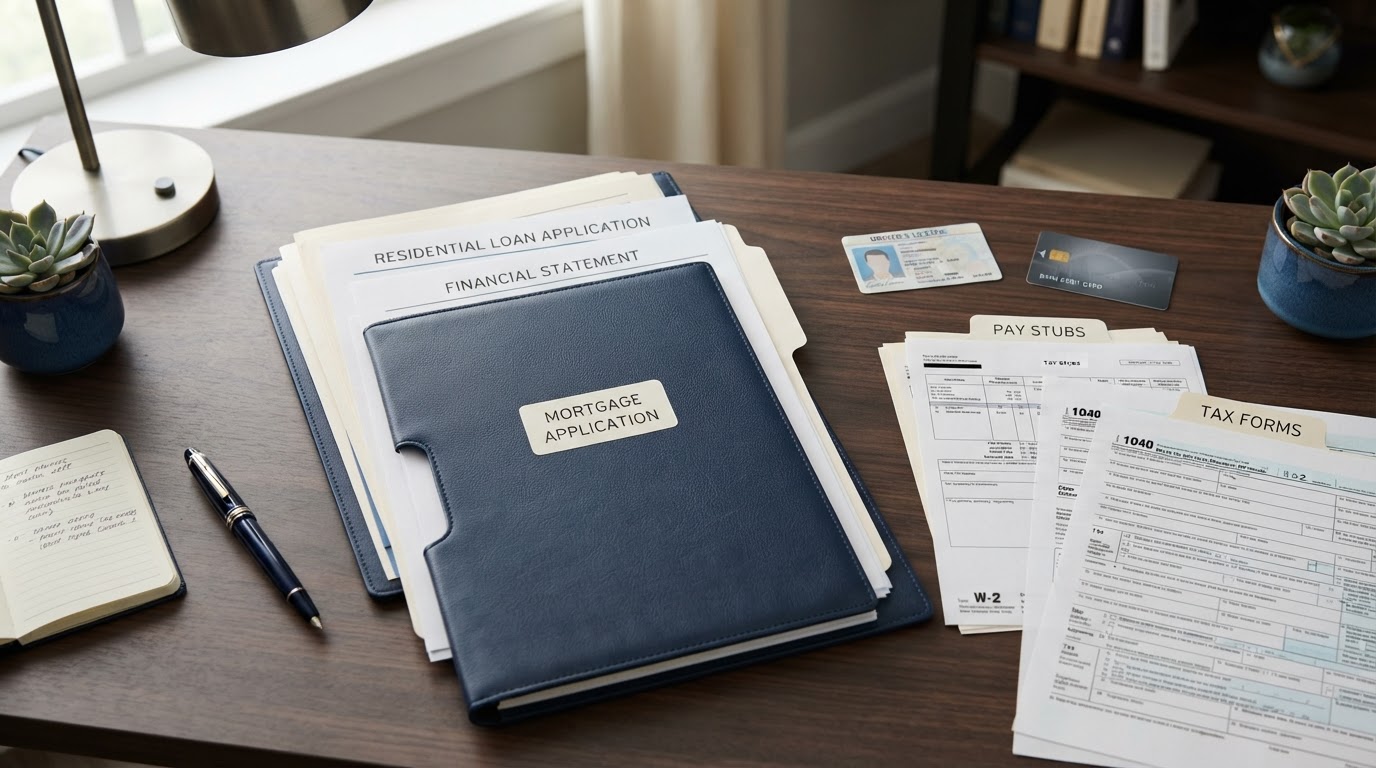
One of the fastest ways to slow down a mortgage application is missing paperwork. Lenders need to verify your identity, income, assets and debts before they can approve your loan. Gathering the documents needed for a mortgage application ahead of time can help you close faster and with less stress.
The short answer: lenders typically need your photo ID, income records (pay stubs and W-2s), tax returns, bank and asset statements, and information about your debts. Self-employed buyers may need additional business records. Read our mortgage pre-approval checklist for a full preparation guide.
Why lenders need these documents
A mortgage is a large loan secured by your home. Before approving it, the lender must confirm:
- Who you are (identification)
- How much you earn (income)
- What you own (assets and savings)
- What you owe (debts and liabilities)
- That the property is worth the purchase price
Each document helps the lender verify one of these areas. The faster you provide complete, accurate documents, the faster your loan moves.
Identification
Lenders need to confirm your identity. Common items include:
- A government-issued photo ID (driver's license, state ID or passport)
- Your Social Security number
- If you are a permanent resident, your permanent resident card
Income records
Income is one of the most important parts of your application. Lenders usually want:
- Recent pay stubs, often covering the last 30 days
- W-2 forms, often for the last two years
- A verification of employment, which the lender may request directly from your employer
If your income includes bonuses, commissions or overtime, lenders may look at a longer history to confirm it is stable and likely to continue.
Tax returns
Lenders often request federal tax returns, including all schedules, for the last two years. Tax returns show your income history and any business or rental income.
If you are self-employed, tax returns are especially important. Lenders usually look at your net business income after deductions, which can be lower than your gross revenue. Keep complete, organized returns.
Bank and asset statements
Lenders need to see that you have the funds for your down payment and closing costs, plus reserves. They typically ask for:
- Recent bank statements, often for the last two months
- Statements for savings, investment or retirement accounts
- Documentation for any gift funds, if someone is helping with your down payment
Large or unexplained deposits can trigger questions. Be ready to document where the money came from, especially for gifts.
Debt information
Your debts affect how much you can borrow. Lenders review:
- Credit card balances and minimum payments
- Car loans, student loans and personal loans
- Child support or alimony obligations
- Any other recurring debts
Most of this appears on your credit report, but lenders may ask for statements to confirm balances and payments.
Employment verification
Lenders usually verify your employment directly with your employer. If you have recently changed jobs, be ready to explain the change. Lenders may also check your employment again before closing, so avoid job changes without talking to your loan officer first.
Additional documents lenders may request
Depending on your situation, the lender may also ask for:
- A letter of explanation for a credit item or large deposit
- Divorce or separation papers, if you pay or receive support
- Business licenses or profit-and-loss statements for self-employed buyers
- Rental agreements, if you own other properties
- Bankruptcy discharge papers, if applicable
Tips to prepare your documents
- Save everything as clear PDFs in one folder.
- Respond to your lender's requests quickly.
- Avoid new credit, large purchases or job changes during the process.
- Keep your finances steady until closing.
- Ask your loan officer what else you may need for your specific loan.
Frequently asked questions
Do I need to provide original documents? Lenders usually accept clear copies (PDFs). Keep originals in case they are requested.
How recent do my documents need to be? Most income and bank documents should cover the last 30 to 60 days. Ask your lender for the exact requirement.
What if I am self-employed? Self-employed buyers often need personal and business tax returns, a year-to-date profit-and-loss statement, and business bank statements. Some lenders offer bank-statement programs for qualifying borrowers.
Will the lender check my credit again before closing? Many lenders do a final credit check before closing. Avoid new credit or large purchases until after you close.
Ready to start your application?
When you are ready, get a free quote or get pre-approved with Alex.
You can also call Alex Al-Ammar at (313) 992-9898 or email Alex@vestalending.com.
This article is for general information only. It is not legal, tax or financial advice. Document requirements vary by lender, loan program and borrower situation. Speak with a qualified professional about your individual situation.