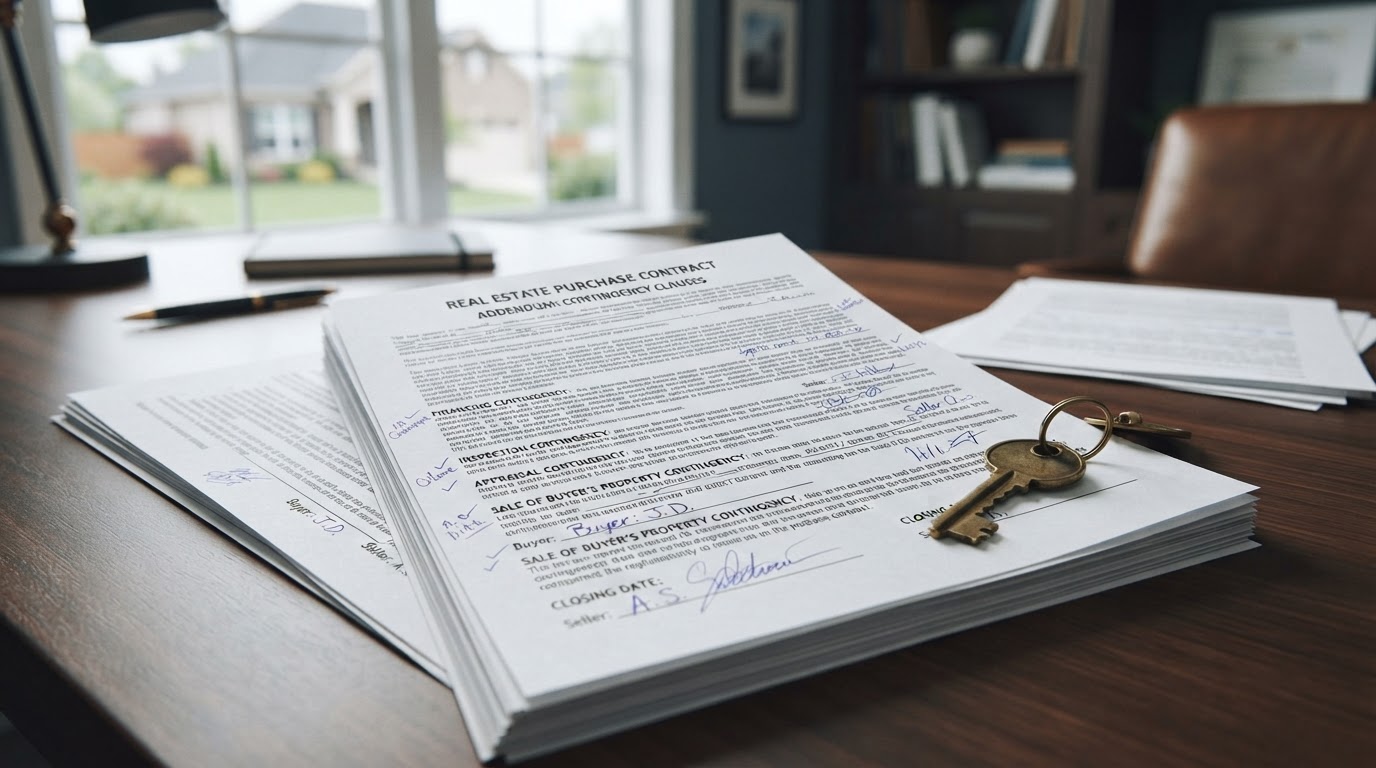
When you make an offer on a home, you can include conditions that must be met before the sale is final. These conditions are called contingencies, and an offer with them is a contingent offer. Understanding what a contingent offer is helps you protect your money while still making a competitive offer.
The short answer: a contingent offer is an offer that becomes a binding contract only if certain conditions are met. Common contingencies cover financing, appraisal, inspection and the sale of your current home. Each contingency usually has a deadline, and missing it can affect your protection. See our guide on earnest money for how contingencies protect your deposit.
What is a contingent offer?
A contingent offer is an offer to buy a home that depends on one or more conditions being met. If a condition is not met, you may be able to cancel the contract and recover your earnest money, depending on your contract and deadlines.
Contingencies protect you as a buyer. They give you a way to back out (or renegotiate) if something goes wrong before closing.
Common types of contingencies
Financing contingency
A financing contingency says the sale depends on you getting a loan under certain terms. If you cannot get a loan on those terms, you may be able to cancel and recover your earnest money.
This is one of the most important contingencies for buyers who need a mortgage. Without it, you could be on the hook for the purchase even if your loan falls through.
Appraisal contingency
An appraisal contingency says the sale depends on the home appraising for at least the purchase price. If the appraisal comes in low, you may be able to:
- Renegotiate the price
- Cover the appraisal gap in cash
- Cancel and recover your earnest money
This protects you from overpaying if the home does not appraise.
Inspection contingency
An inspection contingency lets you inspect the home and negotiate repairs or credits based on the results. If the inspection reveals issues and you cannot reach an agreement with the seller, you may be able to cancel.
Some buyers waive the inspection contingency to make a stronger offer, but that is risky — you could be stuck with expensive repairs after closing.
Home-sale contingency
A home-sale contingency says the sale depends on selling your current home first. This protects you if you cannot afford two mortgages, but it makes your offer less attractive to sellers because it depends on another sale.
In a competitive market, sellers may prefer offers without a home-sale contingency.
Common deadlines
Each contingency usually has a deadline. For example:
- The financing contingency may require you to apply for a loan within a set time.
- The appraisal contingency may require you to respond within a set number of days after the appraisal.
- The inspection contingency may require you to complete the inspection and respond within a set period.
Missing a deadline can remove your protection. Read your contract carefully and ask your real estate professional or attorney to explain each deadline.
Potential negotiation outcomes
When a contingency is triggered (for example, a low appraisal or a bad inspection), you and the seller may:
- Renegotiate the price
- Agree on repairs or credits
- Split the difference
- Cancel the contract (if the contingency allows)
The outcome depends on your contract, the market and what both sides are willing to do.
Why buyers should understand their contract terms
Contingencies are only as strong as your contract and your deadlines. Before you sign:
- Read each contingency and its deadline.
- Ask your real estate professional or attorney to explain anything unclear.
- Know what happens if a contingency is not met.
- Understand how removing a contingency changes your risk.
In a competitive market, some buyers remove contingencies to make stronger offers. That can win the house, but it increases your risk. Balance competitiveness with protection.
How to decide which contingencies to include
- Talk with your real estate professional about your market.
- Consider your comfort with risk.
- Think about whether you need to sell a home first.
- Review your cash and whether you could cover an appraisal gap.
- Decide how much risk you are willing to take to make your offer stronger.
Frequently asked questions
What does "contingent" mean on a listing? A contingent listing usually means the seller has accepted an offer, but the sale depends on certain conditions being met. The deal is not final until the contingencies are cleared.
Can I cancel a contingent offer? If a contingency is not met and you act within the deadlines, you may be able to cancel and recover your earnest money, depending on your contract.
Should I waive contingencies to make a stronger offer? Waiving contingencies can make your offer more attractive, but it increases your risk. Talk with your real estate professional and consider the trade-offs.
What is a home-sale contingency? A contingency that makes the sale depend on selling your current home first. It protects you but makes your offer less attractive to sellers.
Ready to make a smart offer?
When you are ready, get a free quote or get pre-approved with Alex.
You can also call Alex Al-Ammar at (313) 992-9898 or email Alex@vestalending.com.
This article is for general information only. It is not legal, tax or financial advice. Contingency rules and deadlines vary by contract and jurisdiction. Speak with a qualified real estate professional or attorney about your individual situation.